
Healing the Mother Wound: Nurturing Your Body and Relationships
Updated: Nov 19
She carries it in her shoulders.
That particular way of hunching forward, as if bracing for impact. The mother wound lives there, in the spaces between what we needed and what we got. It shapes our bodies. Our relationships. The way we breathe, or forget to.
Actually, I didn't even know I had one until my massage therapist pointed out how I held my left shoulder. "You're protecting something," she said, fingers finding knots I'd carried for decades. Something about the way she said it, gentle but knowing, made me want to cry right there on her table.
The mother wound isn't always dramatic. Sometimes it's subtle as a held breath.
Why Does the Body Hold Onto Unresolved Mother Wounds?
The body holds onto mother wounds because the nervous system stores emotional experiences as physical patterns, not just memories. Tension, held breath, and digestive upset can all be the body's way of keeping old protective habits active long after the original situation has passed.
Our nervous systems are basically walking archives. They file away every interaction, every emotional temperature, every moment we felt seen or unseen. And mothers? Well, they're our first teachers in the art of being human.
But what happens when that teaching gets complicated?
I think about Sarah, one of my clients who came to me for chronic neck pain. Traditional doctors couldn't find anything wrong. Physical therapy helped temporarily. But the tension always returned, especially after phone calls with her mom.
"She means well," Sarah would say, rubbing the base of her skull. "She just... has opinions about everything I do."
Those opinions lived in Sarah's neck. Every criticism about her career choices, her relationship, her weight, stored in muscle memory. Her body was carrying the weight of disapproval.
The thing is, our bodies don't lie. They hold information in ways our minds sometimes can't process right away. When we're young and our emotional needs aren't met consistently, our nervous system learns to stay alert. Ready. Tense.
This shows up as:
Chronic muscle tension (hello, shoulders and jaw)
Digestive issues that flare during family visits
Sleep problems when relationships get intense
Feeling like you're "too much" or "not enough"
Your body might be trying to tell you something your heart isn't ready to hear yet. And that's okay.
Honestly, I spent years thinking I was just "naturally anxious." Turns out, I was carrying generations of women who never learned it was safe to relax.
How Do Mother Wounds Shape Our Adult Relationships?
Mother wounds shape adult relationships by creating a template for how love, boundaries, and safety are expected to work. Patterns learned in that first bond, whether conditional love or crossed boundaries, tend to repeat in friendships and romantic partnerships until they're noticed and gently changed.
Here's where it gets interesting, or maybe heartbreaking, depending on your perspective.
The patterns we learn in our first relationship become our template for all the others. If love felt conditional, we might find ourselves performing for approval in every relationship that follows. If boundaries were crossed or ignored, we might struggle to set them ourselves.
Or we swing the opposite direction entirely.
My friend Lisa grew up with a mother who was emotionally unavailable. Depressed, distant, physically present but energetically gone. So Lisa learned to be hyper independent. She built walls so high that intimacy felt dangerous.
"I don't need anyone," became her anthem. Until it became her prison.
She attracted partners who were also unavailable, confirming her belief that love equals abandonment. The pattern repeated until she couldn't ignore it anymore.
Sometimes we recreate what we know, even when it hurts. Because familiar feels safer than unknown, even when familiar is painful.
But here's the thing about patterns, once you see them, you can't unsee them. And once you can't unsee them, you have a choice.
The mother wound shows up in relationships as:
People-pleasing until you're exhausted
Difficulty receiving love or compliments
Attracting partners who mirror your mother's emotional patterns
Feeling responsible for everyone else's emotions
Fear of abandonment or engulfment (sometimes both)
Recognizing these patterns isn't about blame. It's about freedom.
How Can You Begin Reparenting Your Nervous System?
You can begin reparenting your nervous system by noticing your patterns without judgment, then gently offering yourself the steadiness and compassion you may have missed earlier in life. This is gradual work, best supported by breathwork, movement, and safe relationships rather than a single fix.
Healing starts with noticing. Without judgment. Just awareness.
Your body has been trying to protect you based on information it gathered when you were small. That hypervigilance? That tendency to fawn or fight or freeze? It made sense then. It might not serve you now.
So how do we update the system?
First, we learn to befriend our nervous system. Instead of fighting anxiety or tension, we get curious about it. "Oh, hello there, shoulder tension. What are you trying to tell me?"
Breathwork can help support a sense of calm. Not the fancy kind, just slow, deep breathing that signals safety to your system. I do this thing where I breathe in for four counts, hold for four, breathe out for six. The longer exhale is associated with supporting the parasympathetic nervous system. Science is pretty interesting sometimes.
Movement matters too. Tension can live in the body, and sometimes we need to literally shake it out. Dance. Walk. Swim. Whatever feels good and gets your energy moving.
But honestly? The deepest healing happens in relationship.
We learn new patterns by experiencing them. This might mean therapy with someone who provides the emotional attunement you missed. Or friendships that feel safe and consistent. Or a romantic partner who doesn't run when you're vulnerable.
Actually, let me be more honest. The deepest healing happens in relationship with yourself first.
Learning to speak to yourself the way you wish your mother had. Offering yourself the compassion you've been seeking everywhere else.
This isn't about perfection. It's about practice.
Some days you'll catch yourself in old patterns and offer yourself grace. Other days you'll react from that wounded place and then tend to the aftermath with kindness. This is the work. This kind of reflection can complement, not replace, support from a qualified therapist or counselor, especially if old wounds feel heavy to carry alone.
Can Energy Healing Help With Mother Wound and Lineage Patterns?
Energy healing practices like Reiki, chakra work, and crystal rituals can offer a supportive, grounding space for reflecting on mother wound and lineage patterns. These practices are meant to complement, not replace, medical or psychological care.
Here's something I've noticed in my healing practice: mother wounds often carry ancestral patterns.
Your grandmother's unprocessed experiences become your mother's unconscious parenting style becomes your nervous system's default setting. Generation after generation of women who weren't encouraged to have needs, speak their truth, or take up space.
But here's the beautiful part, healing your mother wound doesn't just support you. It supports the whole line.
When you choose to parent yourself differently, you're changing your family's emotional pattern. Future generations won't have to carry what you're transforming now.
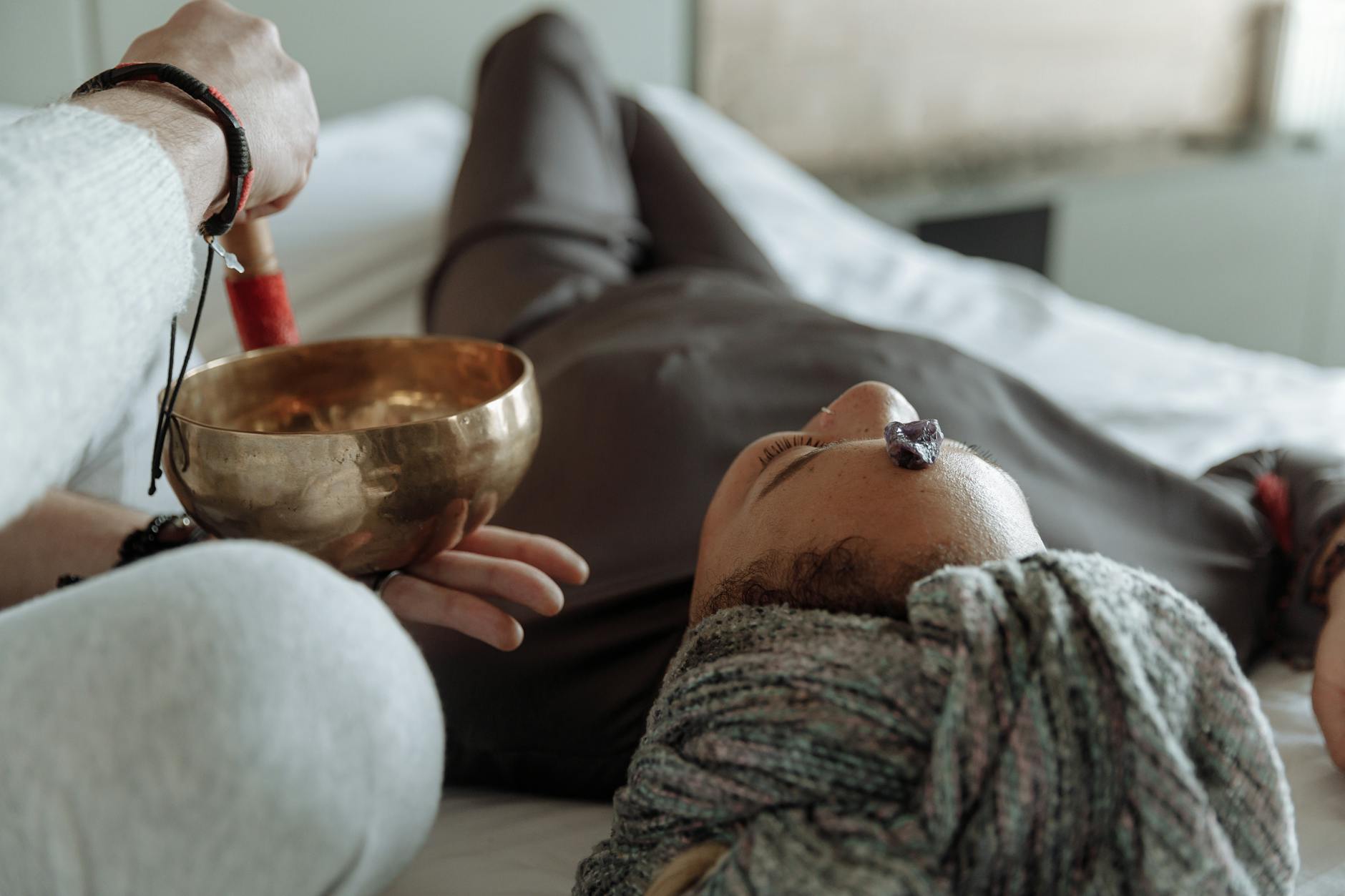
I use a lot of different modalities in this work. Reiki to help move stuck energy. Chakra healing to help balance the heart and throat centers (where we hold relationship and expression patterns). Crystal work, rose quartz for self-love, amazonite for healthy boundaries, moonstone for connecting with divine feminine energy.
But honestly? The most powerful tool is intention.
When you consciously choose to work on these patterns, you're already most of the way there. The rest is just showing up for the process.
What Are Practical Daily Steps for Healing the Mother Wound?
Practical daily steps include checking in with your needs each morning, practicing small boundary language, noticing your body's signals, and building simple nurturing rituals. Awareness is a beautiful start, but consistent small practices are what create lasting ease.
Okay, let's get practical for a minute. Because awareness is lovely, but integration is everything.
Start your morning by placing a hand on your heart and asking, "What do I need today?" Not what you should need. What you actually need. Then try to give yourself at least one of those things.
Notice your relationship with boundaries. Do you say yes when you mean no? Practice saying "Let me think about it" instead of automatic agreement. Your people-pleasing patterns probably developed as coping strategies in childhood, but you're safe to have preferences now.
Pay attention to your body's signals. That knot in your stomach when certain people call? That's information. Your anxiety before family gatherings? Data. Your body is constantly communicating, we just need to listen.
Create rituals that feel nurturing. Maybe it's a bath with Epsom salts and lavender. Maybe it's journaling with your morning coffee. Maybe it's dancing in your kitchen while dinner cooks. Whatever helps you connect with the part of yourself that deserves tenderness.
And please, please be patient with yourself. This stuff didn't develop overnight, and it won't ease overnight either.
Some days you'll feel like you're making progress. Other days you'll catch yourself in old patterns and wonder if anything's changed. Both are part of the process.
I still sometimes catch myself holding my breath when my phone rings and I see certain names. The difference now is that I notice, breathe, and choose my response instead of just reacting.
That's growth. Not perfection, but conscious choice.
The mother wound isn't something to fix, it's something to understand. To integrate. To transform into wisdom and compassion, both for yourself and for the little girl inside who's still waiting to be seen.
She's worth the wait. You're worth the work.
And honestly? The world benefits from women who have done this healing work. Who can love without losing themselves, set boundaries with grace, and show up fully without performing.
Your healing matters more than you know.
Frequently Asked Questions
What exactly is the mother wound?
The mother wound refers to patterns of tension, self-doubt, or relationship difficulty that form when early emotional needs with a mother figure weren't consistently met. It shows up in the body and in relationships, and understanding it is a step toward more ease, not a diagnosis.
Is the mother wound a clinical diagnosis?
No, it isn't a clinical or medical diagnosis, it's a descriptive concept used in coaching and healing work. If you're dealing with ongoing distress, a licensed therapist or counselor can offer appropriate support alongside this kind of reflective work.
Can breathwork and movement really ease mother wound tension?
Many people find that slow breathing and gentle movement help support a sense of calm and release physical tension tied to old emotional patterns. These practices work best as a complement to, not a replacement for, professional care when deeper issues are present.
How long does healing the mother wound usually take?
There's no fixed timeline, since healing tends to happen gradually through repeated small practices rather than one single breakthrough. Patience and consistency matter more than speed.
Nora Coaching
www.noracoaching.com
Related reading

Comments