

Embracing the Empty Nest: Cultivating Purpose and Healing Beyond Motherhood
Updated: Oct 18
The silence hits differently at 3 PM.
That's when I used to hear the school bus rumbling down our street, followed by the symphony of backpacks hitting the floor and teenage voices calling out their daily dramas. Now there's just the hum of the refrigerator and my own heartbeat. Embracing the empty nest isn't just about missing your kids, it's about remembering who you were before you became Mom and figuring out who you're meant to be next.
Actually, let me back up. I thought I'd prepared for this transition. Read the books, joined the online groups, even started that pottery class six months early. But nobody warns you about the weird stuff. Like how you'll still buy enough groceries for four people. Or how you'll catch yourself listening for footsteps that aren't coming.
How do you find your voice in an empty house?
You find your voice by noticing the space your children's absence has created and filling it, slowly and on purpose, with things that are only yours. That space is not empty at all, it is room to move again after years of putting everyone else first.
The first few weeks feel like living in a museum of your former life. Everything's exactly where it should be, but nothing feels alive anymore. I remember standing in my daughter's room, she'd been gone three weeks by then, and I could still smell her vanilla body spray mixed with that particular teenage musk of forgotten laundry.
But here's what I've learned about empty nest energy healing: the emptiness isn't actually empty. It's space. Actual, breathable, workable space that you haven't had in probably two decades. And energy, well, energy tends to settle into space when it's given the chance.
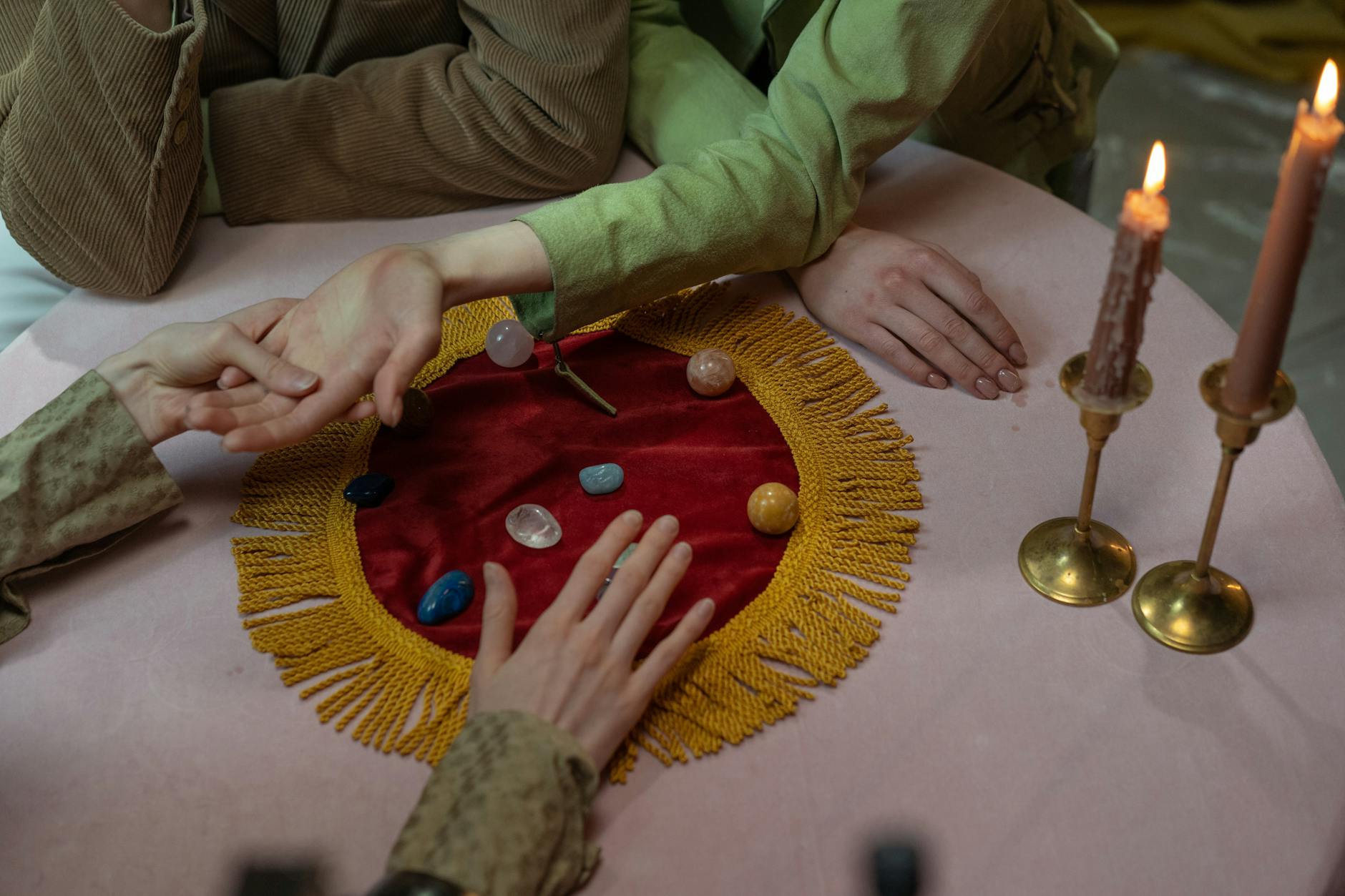
So I started small. Lit a candle in the living room at noon just because I could. Nobody was going to complain about the scent or worry about fire safety. Then I played music. Loud music. The kind of soul-stirring stuff I used to love before everything became background noise to homework supervision and soccer schedules.
Music changes everything. It shifts the energy from static to flowing, from waiting to being. I danced in my kitchen, actually danced, not that swaying while cooking thing, and felt something wake up inside my chest. Something that had been sleeping for years.
This kind of practice isn't always about crystals and meditation cushions. Sometimes it's about cranking up Stevie Nicks and remembering what your body feels like when it moves for joy instead of efficiency. It can complement, not replace, any support you're already getting from a counselor or therapist during this transition.
How do you reclaim your own rhythm after the kids leave home?
You reclaim your rhythm by paying attention to your own hunger, tiredness, and energy instead of the schedules that used to run your day. It takes practice, because your body has spent years answering to bells, practices, and other people's bedtimes.
Motherhood operates on everyone else's schedule. School bells. Soccer practice. Birthday parties. Bedtimes that stretch into negotiations that would make diplomats weep. When was the last time you ate lunch when you were actually hungry? Or took a bath that lasted longer than seven minutes?
I had to relearn my own rhythms. Sounds dramatic, but it's true.
The first month, I kept waking up at 6:30 out of habit. But instead of rushing into the morning chaos machine, I just sat there. Watched the light change on my bedroom wall. Listened to the birds having their morning conference outside my window. It felt revolutionary.
This is where the real healing happens, in those spaces between what you used to do and what you choose to do now. Your body has been running on external cues for so long, it's forgotten its own wisdom. But bodies remember. They always remember.
I started following my energy instead of fighting it. Some days that meant working in the garden until my hands were black with earth. Other days it meant staying in pajamas until 3 PM and reading poetry that made me cry for reasons I couldn't name. Both felt equally worthwhile.
Honestly, I think we've been taught that productivity equals worth. But a lot of ease happens in the pauses. In the moments when you're not performing for anyone, not managing anyone else's emotions, not anticipating anyone's needs.
How do you begin a new creative chapter after raising kids?
You begin again by returning to the interests you set aside, even imperfectly, and giving them a physical space in your home. Beginning again does not mean starting from zero, it means picking up a thread that was only ever paused.
Last Tuesday, I drove past my old art supply store. The one I used to frequent before kids, when I thought I might actually become a real artist someday. I'd driven past it probably a hundred times in the last few years, always meaning to stop, always having somewhere more urgent to be.
This time I pulled in.
The smell hit me immediately, that mixture of paper and pigment and possibility. The woman behind the counter, probably my age, was arranging watercolor tubes like she was composing music. We talked for twenty minutes about brushes and paper weight and how intimidating blank canvases can be. I bought supplies for projects I hadn't even imagined yet.
That night, I set up a little corner in what used to be the formal dining room. Nobody's eaten formally in that room in probably eight years anyway, it just collected mail and school permission slips. Now it holds an easel and a lamp and jars full of brushes that smell like turpentine and dreams.
Beginning again doesn't mean starting over. It means returning to parts of yourself that got set aside during the full, exhausting years of raising humans. Those parts didn't disappear. They were just waiting.
Actually, let me tell you about something that happened last week. I was painting, badly, but with complete joy, when my neighbor knocked. She's going through her own empty nest transition, and she stood in my doorway looking at my messy art corner like it was some kind of miracle. I used to write, she said quietly. I had notebooks full of stories.
We spent the afternoon talking about the creative selves we'd temporarily shelved. She went home and dug out those old notebooks. Now we meet Tuesday evenings, she writes in the living room while I paint in the dining room, and we share tea and progress reports.
This kind of change doesn't always happen in isolation. Sometimes it happens in parallel, with people who understand the particular grief of rediscovering yourself.
What does self-care look like in an empty nest?
Self-care in an empty nest means intentional, solo time that isn't squeezed between errands, like taking yourself on a date or sitting somewhere quiet without a reason to rush. It looks smaller on the surface but runs deeper than the fifteen stolen minutes it used to be.
Self-care used to mean stealing fifteen minutes in Target without anyone asking me to buy them something. Now it means something entirely different. Deeper. More intentional.
I've started taking myself on dates. Sounds silly, but I'm serious about it. Last month I took myself to the botanical garden on a Tuesday morning. Spent two hours just sitting by the pond, watching dragonflies write their temporary poetry across the water's surface. Nobody needed snacks. Nobody got bored. Nobody complained about the walking.
Solitude feels different from loneliness. Solitude feels spacious and choice-filled. Loneliness feels tight and empty. I'm learning to tell the difference.
But here's what I wasn't expecting: the guilt. Mom guilt doesn't end when your kids move out, it just transforms. Now I feel guilty for enjoying my freedom. For not missing them every single moment. For discovering that I actually like eating dinner at 5 PM instead of waiting until everyone's schedules align at 8:30.
I've started doing forgiveness work around this. Not the formal, ritualized kind, though that has its place, but the daily, moment-by-moment kind. When I catch myself feeling guilty for being happy in my empty house, I take a breath and remind myself: raising independent humans who can thrive without constant oversight was literally the goal.
My own practice now includes a lot more boundary work than it used to. Boundaries with my own expectations. With my adult children's assumption that I'm always available for emotional processing. With friends who seem to think my newfound free time means I'm available for all their crises.
The Invitation Forward
This transition isn't something to endure, it's something to meet with openness. Your empty nest isn't a loss, it's an invitation. An invitation to remember that you're not just someone's mother. You're a complete person with dreams and desires and energy that belongs to you.
Start where you are. If you're reading this in a house that still smells like your teenager's athletic socks and yesterday's pizza, that's fine. The change doesn't happen overnight. But it does happen.
Light a candle today.
Play music that moves something in your chest.
Take a bath that lasts longer than ten minutes.
Call that friend you haven't talked to since everyone was in elementary school.
Buy art supplies or plant seeds or sign up for that class you've been thinking about for three years.
Your energy is your own again. That's not selfish, that's worth protecting.
The house is quiet now, but it's not empty. It's full of potential. Full of space for you to expand into. Full of possibility for who you're becoming.
The silence at 3 PM? I've learned to love it. It sounds like freedom.
Frequently Asked Questions
Is it normal to grieve when your kids leave home?
Yes, grief is a common response to this transition and it can sit alongside relief or excitement at the same time. If the grief feels heavy or prolonged, talking with a therapist or counselor can offer support beyond what any article can provide.
How long does it take to adjust to an empty nest?
There is no fixed timeline, some people find a new rhythm within weeks while others need a year or more. Small, repeated practices like the ones described here tend to ease the adjustment gradually rather than all at once.
What is empty nest energy healing?
Empty nest energy healing refers to intentional practices, like music, movement, candlelight, and quiet reflection, used to settle and redirect your energy during this life change. It is a complementary wellness practice, not a medical or psychological treatment.
How can I rebuild a sense of purpose after my children move out?
Rebuilding purpose often starts with revisiting interests you paused during child-rearing, whether that's art, writing, gardening, or a class you once wanted to take. Purpose tends to return through small, consistent action rather than one single decision.
Nora Coaching
www.noracoaching.com
Related reading

Comments